Craftsmanship Casts Quality, Dripping-Proof——Complete Production Process of Faucets
博客文章简介。
4/21/20268 min read
As an indispensable water terminal in homes and commercial spaces, faucets may seem small and simple, but they embody the elaborate craftsmanship of multiple precision processes. From a raw metal ingot to a smooth, durable, and water-efficient finished product, every step requires strict control of precision, material, and craftsmanship to fulfill the quality commitment of "dripping-proof". Below, we will detailedly disassemble the complete production process of faucets and take you into the industrial craftsmanship behind this daily necessity.
I. Preliminary Preparation: Raw Material Selection and Mold Making
A good product starts with good raw materials. The quality foundation of a faucet begins with raw material selection and mold making, which directly determines the durability and precision of the product.
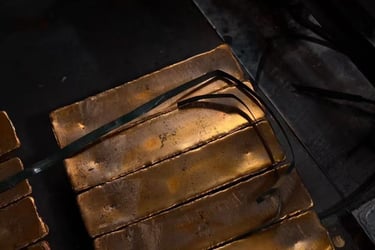
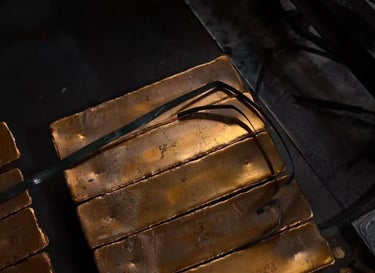
In terms of raw materials, high-quality faucets on the market mostly adopt high-grade Class A brass ingots (such as 62 refined copper), and some high-end products choose SUS304 stainless steel or polymer composite materials. Among them, brass has become the mainstream choice due to its corrosion resistance, easy processing, and certain bactericidal properties. Before the raw materials enter the factory, professional equipment such as German spectrometers will be used to detect the content of 15 elements in the copper material within 1 minute, strictly control the material ratio, prevent product defects caused by impurity mixing, and ensure that the raw materials meet national and international relevant standards. Especially for faucets in direct contact with drinking water, the lead content will be controlled in advance to lay the foundation for the subsequent lead washing process.
Mold making is the key to forming. It is precision-carved by 3D computer CNC milling machines to accurately replicate the designed shape of the faucet, ensuring precise mold size and smooth inner wall. The mold material is mostly high-strength steel, which has sufficient wear resistance and high temperature resistance after quenching, grinding and other treatments. It can not only ensure the consistency of mass production, but also avoid product deformation, sand holes and other problems caused by mold wear. After the mold is made, it will be tested and adjusted to confirm no deviation before being put into formal production.
II. Core Process 1: Casting——Giving the Product Shape
Casting is the core step of converting metal raw materials into faucet blanks. At present, the mainstream processes are gravity casting, low-pressure casting and sand casting, and different processes correspond to products of different quality positioning.
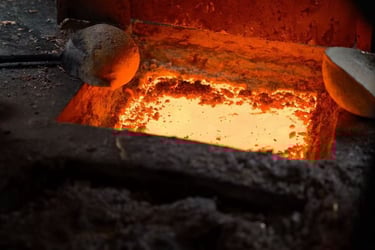
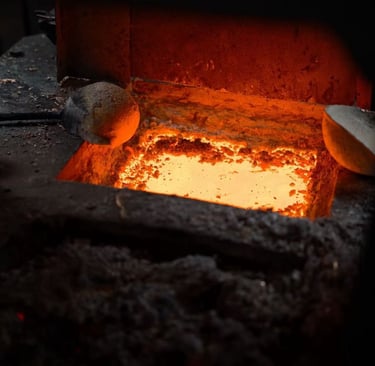
High-end faucets mostly adopt gravity casting process. The molten brass solution (temperature controlled above 1000℃) is slowly injected into the mold through the runner, and the mold is naturally filled in all corners by gravity. After cooling, a blank with dense structure and uniform wall thickness is formed. This process can effectively reduce sand holes and air holes inside the blank, make the metal grains fine, not only improve the firmness of the product, but also make the subsequent electroplating layer bond more closely, extending the service life.
Mid-to-low-end products mostly adopt sand casting, which is poured through sand molds with low cost. However, the internal structure of the blank after forming is relatively sparse, which is prone to sand holes, air holes and other defects, and additional repair treatment is required later. In addition, there is a more advanced die-casting process, which can realize one-time pressing and grinding forming, with higher production efficiency and better finished product precision, which is mostly used for mass production of high-end products.
After pouring, wait for the metal solution to cool completely (the cooling time is adjusted according to the product size, generally 1-2 hours), then perform demoulding treatment. The taken-out blank needs to first remove the excess parts such as gates and risers on the surface, then perform preliminary grinding to remove burrs and rough protrusions on the surface, and prepare for subsequent processing. At the same time, the blank will be initially inspected to eliminate unqualified products with obvious cracks, sand holes and deformation.
III. Core Process 2: Machining——Polishing Precision and Details
Although the shape of the cast blank has been formed, the dimensional accuracy and surface flatness still do not meet the service standards. A series of machining is required to accurately control every detail to ensure the sealing performance and use feel of the faucet.
First, annealing treatment is carried out. The blank is put into a high-temperature furnace to be heated to a specific temperature, then slowly cooled to eliminate the internal stress generated during the casting process and avoid deformation and cracking during subsequent processing. After annealing, the blank enters the CNC machine tool for precision machining. Through various cutting processes such as turning, milling, drilling, planing, grinding and boring, the key parts of the faucet such as interfaces, valve core installation holes and water outlet channels are processed to ensure that the dimensional accuracy and shape and position accuracy meet the design requirements. For example, the control of the precision of the interface thread directly affects the sealing performance of subsequent installation, and the flatness of the valve core installation hole determines the installation precision and switch feel of the valve core.
After machining, grinding treatment is carried out. Through tools such as grinding wheels and sandpaper, the machining marks, burrs and pits on the surface are gradually ground off, so that the product surface has no obvious sand holes and air holes, and the lines are smooth and smooth. For the spare parts of the faucet (such as shafts, nuts, screws, etc.), copper bars are used to make blanks through forging, and then machinists process threads (commonly known as tapping) according to size specifications such as 1/2 inch and 3/4 inch to ensure the adaptability of the parts.
After processing, tolerance inspection will be carried out, and the size of each part will be detected by professional measuring tools. Unqualified products will be reworked or scrapped to ensure that each semi-finished product meets the precision standard.
IV. Core Process 3: Surface Treatment——Balancing Aesthetics and Durability
Surface treatment is a "double guarantee" for the appearance and durability of the faucet. It can not only make the product surface smooth and bright, but also enhance its corrosion resistance and wear resistance, extending the service life. At present, the mainstream surface treatment processes include electroplating, vacuum ion PVD, ORB (oil-rubbed bronze), etc., among which chrome electroplating is the most widely used.
The electroplating process needs to go through multiple pre-treatment steps: first, chemical degreasing is carried out on the semi-finished product to remove oil and impurities on the surface; then water washing is carried out to ensure no residue on the surface; then pickling is carried out to remove the oxide layer on the surface to prepare for electroplating. After pre-treatment, enter the electroplating link, adopt the "copper sulfate-nickel-chromium" three-layer electroplating process. The first layer is copper sulfate plating to enhance the adhesion of the plating layer; the second layer is nickel plating to improve the wear resistance and gloss of the surface; the third layer is chromium plating to make the product surface present a mirror texture and enhance corrosion resistance.
The thickness of the electroplating layer of high-quality faucets can reach 8-12 microns, and some high-end products even exceed 20 microns. The plating layer is uniform and closely attached. It can reach level 10 corrosion resistance standard after 24-hour acetate salt spray test, and will not rust, peel, fade and other problems after long-term use. For faucets in direct contact with drinking water, lead washing treatment is required after electroplating. Through two-stage water washing, alkaline lead removal and acid lead removal processes, the lead on the product surface is removed, so that the lead content meets the US NSF61 standard (lead content below 8‰), ensuring human health.
Vacuum ion PVD process is mainly used for high-end products. Through physical vapor deposition in a vacuum environment, metal ions are deposited on the product surface to form a dense protective film. It not only has better appearance texture, but also has better corrosion resistance and wear resistance than traditional electroplating. ORB process can create a retro bronze texture to meet the decoration needs of different styles.
After surface treatment, strict appearance inspection will be carried out to eliminate products with scratches, color differences, plating peeling and other defects on the surface.
V. Core Process 4: Assembly and Commissioning——Integrating Quality and Function
The semi-finished products with qualified surface treatment will enter the assembly link, which is the key step to integrate all parts into a complete product, directly determining the use function and sealing performance of the faucet.
Before assembly, all parts (including valve core, sealing ring, handle, bubbler, hose, etc.) need to be inspected one by one to ensure that the parts are not damaged and the size is suitable. During assembly, according to the order of "valve core installation → sealing ring assembly → handle installation → interface connection → bubbler installation", professional tools are used for precise assembly to ensure that each part is installed in place and not loose. Among them, the valve core is the "heart" of the faucet. At present, precision ceramic valve cores are mainly used, which have high hardness and good sealing performance. The switch can be smooth and labor-saving without water leakage after more than 70,000 times of switching. During assembly, it is necessary to ensure that the valve core is installed flat to avoid jamming, water leakage and other problems.
After assembly, strict commissioning and testing must be carried out, which is the last pass to ensure product quality. First, water pressure test is carried out, with water pressure of 1.6±0.05MPa for 60±5 seconds to ensure that all sealing surfaces have no leakage; then switch feel commissioning is carried out to ensure that the handle rotates smoothly without jamming, and hot and cold water switching is flexible; for faucets with pull-out function, it is also necessary to test the flexibility and sealing performance of the pull-out hose to ensure no falling off and water leakage. Some manufacturers will also conduct 100% air pressure tightness test (8KG air pressure) on the products to further ensure the sealing performance.
VI. Finished Product Inspection and Packaging Factory——Strictly Control Quality, Safe Delivery
After qualified assembly and commissioning, the products enter the finished product inspection link. The inspection standard strictly follows China's GB18145-2003 "Ceramic Disc Sealed Faucets" (which is consistent with the main technical indicators of European EN817 standard), and also refers to international relevant standards (such as US UPC certification, European CE certification, Australian WELS certification, etc.).
Finished product inspection items include: appearance quality (smooth surface, no scratches, no color difference), thread precision, assembly integrity (complete marks, no looseness), sealing performance (no leakage), flow test (such as the flow of basin faucet is not more than 9 liters per minute under 0.1MPa dynamic pressure), life test, etc. The inspection adopts the combination of sampling inspection and full inspection. Unqualified products will be reworked or scrapped to ensure that 100% of the factory products meet the quality standards.
Qualified products will be cleaned and wiped to remove dust and stains on the surface, then packaged. The packaging uses shockproof and moisture-proof materials to ensure that the products are not damaged during transportation. At the same time, product manuals, warranty cards and other relevant materials are placed in the packaging, and finally packed and put into the warehouse, waiting for factory delivery to consumers.
VII. Process Summary: Adhere to Craftsmanship, Quality First
From raw material selection to packaging factory, a high-quality faucet needs to go through seven core links and dozens of detailed processes: "raw material inspection → mold making → casting → machining → surface treatment → assembly and commissioning → finished product inspection". Every step is inseparable from the support of precision equipment and the elaborate control of workers. Whether it is the dense structure of gravity casting, the precise details of CNC processing, the durable luster of three-layer electroplating, or the strict sealing test, all are to realize the quality commitment of "dripping-proof and durable".
With the continuous upgrading of industry technology, the faucet production process is also constantly optimized. The application of technologies such as environmentally friendly trivalent chromium electroplating, low-lead treatment and automatic assembly not only improves product quality, but also better meets the consumer demand for green environmental protection, health and safety. Every seemingly ordinary faucet carries the rigor and craftsmanship of industrial manufacturing, silently guarding the convenience and peace of mind of our daily life.
Quality
Sincerity, reciprocity, innovation
Contact
© 2025. All rights reserved.